


PRODUCTS
NEWS
- Advantages of High-Temperature Microwave Heating
- Shijiazhuang Hongtao Technology Launches Advanced Wood Drying Room for Energy-Saving Production
- Title: Shijiazhuang Hongtao Technology Wood Dryer Finds Use Across Industries
- 专业的电池正负极材料高温碳化微波焙烧炉辊道窑哪家好
- 好用的电池正负极材料高温碳化微波焙烧炉辊道窑耐用的生产厂家
Contact us
Contacts:liu
Mobile:+86-15631158838
Tel:+86-15631158838
E-mail:zekun1985@126.com
Add:No. 3, Xu Road, Leping, Xiping, Zhengding, Shijiazhuang, Hebei Province

Advantages of high temperature push plate kiln
Column:High-Temperature Pusher Plate Kiln
Date:2025-12-05
Visits:47
Desc:Analysis of the core advantages of high-temperature push plate kilns - enabling efficient sintering of high-end materials
Analysis of the core advantages of high-temperature push plate kilns - enabling efficient sintering of high-end materials. As the core equipment for continuous high-temperature heat treatment, high-temperature push plate kilns are widely used in fields such as powder materials (such as ceramic powders and catalyst powders), electronic ceramic components, carbon fiber preform sintering, and special refractory materials due to their precise temperature control, high efficiency and stability, and strong process adaptability. The following is a systematic review of its core advantages from the five dimensions of technical performance, production efficiency, process adaptation, energy conservation and environmental protection, and operational reliability:
Extreme temperature control performance to ensure material quality consistency. Wide temperature range adaptability: the maximum operating temperature can reach 1300-1800°C (according to the furnace material, the alumina ceramic furnace can reach 1600°C, and the mullite-corundum material can reach 1800°C), covering medium to ultra-high temperature heat treatment needs, and meeting the sintering process requirements of special materials. High-precision temperature zone uniformity: Using a multi-stage heating design (usually 3-6 temperature zones), combined with the PID intelligent temperature control system, the uniformity error of the effective temperature zone of the furnace is ≤±5℃ (some high-end models can reach ±3℃), avoiding material performance deviations caused by temperature fluctuations and ensuring product performance consistency in mass production. Stable atmosphere control: supports a variety of atmosphere environments such as air, nitrogen, argon, hydrogen (after dilution), etc., equipped with a high-precision flow control system and sealing structure (furnace air tightness ≤5kPa/h), which can accurately control the atmosphere concentration and pressure to meet the material sintering requirements in reducing and inert atmospheres (such as carbonization of carbon fiber preforms and reduction sintering of ceramic powder).
2. Continuous production design to improve production capacity and production efficiency. Uninterrupted operation mode: Adopt a push plate conveying mechanism (the push plate material can be selected from high-temperature resistant materials such as alumina, silicon nitride, silicon carbide) to realize the continuous production of materials "feeding - sintering - discharging", without the need for cooling and heating between batches, greatly shortening the production cycle, and the daily production capacity of a single production line can reach hundreds to thousands of pieces (adjusted according to the furnace size). High degree of automation integration: It can be linked with the loading machine, unloading machine, and automatic detection equipment to realize full process automation control such as material transportation, temperature monitoring, atmosphere adjustment, and fault alarms, reducing manual intervention, reducing labor costs, and avoiding production risks caused by human operating errors. Flexible modular expansion: The furnace body adopts a modular design, which can flexibly expand the length of the temperature zone and the width of the furnace according to production capacity needs, or add a preheating section and a cooling section to adapt to the production of products of different specifications. The later production capacity upgrade costs are low and the cycle is short.
3. Super process adaptability to meet the material processing needs of many fields. Multi-material compatibility: suitable for sintering, roasting, solidification, carbonization and other processes of various powder compacts, block materials, sheet components, fiber preforms, etc. The push plate speed (5-50mm/min steplessly adjustable), holding time (settable from 1-24 hours), and heating rate (1-10℃/min) can be adjusted according to the material characteristics. Adjustable) to adapt to the process parameter requirements of different materials such as ceramics, glass, metal oxides, carbon fibers, etc. Special process customization: Supports vacuum sintering, high-pressure atmosphere sintering, gradient heating and other special process customization. Special sealing structures and atmosphere protection systems can be designed for highly active powder materials and easily oxidized materials, or forced cooling sections (cooling rates up to 15°C/min) can be configured for materials that require rapid cooling to meet the personalized production needs of high-end materials. Suitable for small-batch, multi-variety production: The push plate conveying method supports mixed loading of products of multiple specifications (through partition placement or special tooling). There is no need to significantly adjust equipment parameters when switching product models. It is suitable for small-batch, multi-variety flexible production models and improves production line utilization.
4. Energy-saving and environmentally friendly design to reduce production and operation costs Low energy consumption optimization: the furnace adopts a multi-layer composite insulation structure (the inner layer is ceramic fiber module, the outer layer is aluminum silicate insulation wool + rock wool), with excellent insulation performance, the surface temperature of the furnace body is ≤60℃ (under normal temperature environment), and the heat loss is lower than that of traditional intermittent kilns 30%-50%; some models are equipped with a waste heat recovery system, which can use the waste heat of the exhaust gas to preheat combustion air or workshop heating, further reducing energy consumption. Low emission and environmental protection standards: clean energy heating (electric heating or natural gas heating) is used. The electric heating model has no waste gas emissions. The natural gas model is equipped with a high-efficiency burner and exhaust gas treatment device. The NOx emission is ≤50mg/m³, which complies with the national environmental protection emission standards for industrial furnaces. There is no need to invest in additional complex environmental protection equipment. Long service life of consumables: The push plate, furnace and other core components are made of high-temperature-resistant, wear-resistant, and corrosion-resistant materials. Under normal use, the service life can reach 1-3 years, reducing the frequency of consumable replacement and maintenance costs; the heating elements (silicon molybdenum rods, silicon carbon rods, resistance wires) are made of high-quality materials, with good thermal stability and long replacement cycles.
5. The structure is stable and reliable, and operation and maintenance are convenient to reduce the risk of downtime. High-strength structural design: The furnace body adopts a steel structure frame + high-temperature-resistant ceramic lining. It has strong overall rigidity and small deformation. It can operate stably in high-temperature and high-frequency operating environments for a long time, and the service life of the equipment can reach 8-10 years. Intelligent fault warning: Equipped with multiple protection functions such as temperature abnormality alarm, atmosphere pressure over-standard alarm, and push plate stuck detection, it monitors the operating status of the equipment in real time, warns potential failures in advance, and reduces the risk of sudden shutdowns; equipment operation data can be recorded and exported in real time to facilitate production traceability and process optimization. Maintenance is convenient and efficient: there is an access door on the side of the furnace body, and key components such as heating elements and temperature control sensors are easy to disassemble and assemble; the push plate conveying mechanism adopts a modular design and has a low failure rate. Daily maintenance only requires regular cleaning of the furnace, inspection of seals and conveyor tracks, which means the maintenance workload is small and the cost is low.
Summary: Core values empower industrial upgrading. Through the core advantages of "precision temperature control + continuous production + flexible adaptation + energy conservation and environmental protection", high-temperature push plate kilns not only solve the pain points of low production capacity and poor product consistency of traditional intermittent kilns, but also meet the stringent requirements of high-end materials for process stability and environmental protection, becoming key equipment for the large-scale production of emerging industries such as powder materials, electronic ceramics, and carbon fiber. It can not only help companies improve production efficiency and reduce operating costs, but also help product quality upgrades and enhance market competitiveness through stable process control. It is an ideal choice in the field of high-temperature heat treatment.
Recommend
-

High-temperature microwave pusher kiln: advanced heat equipment with high efficiency and intelligence
-
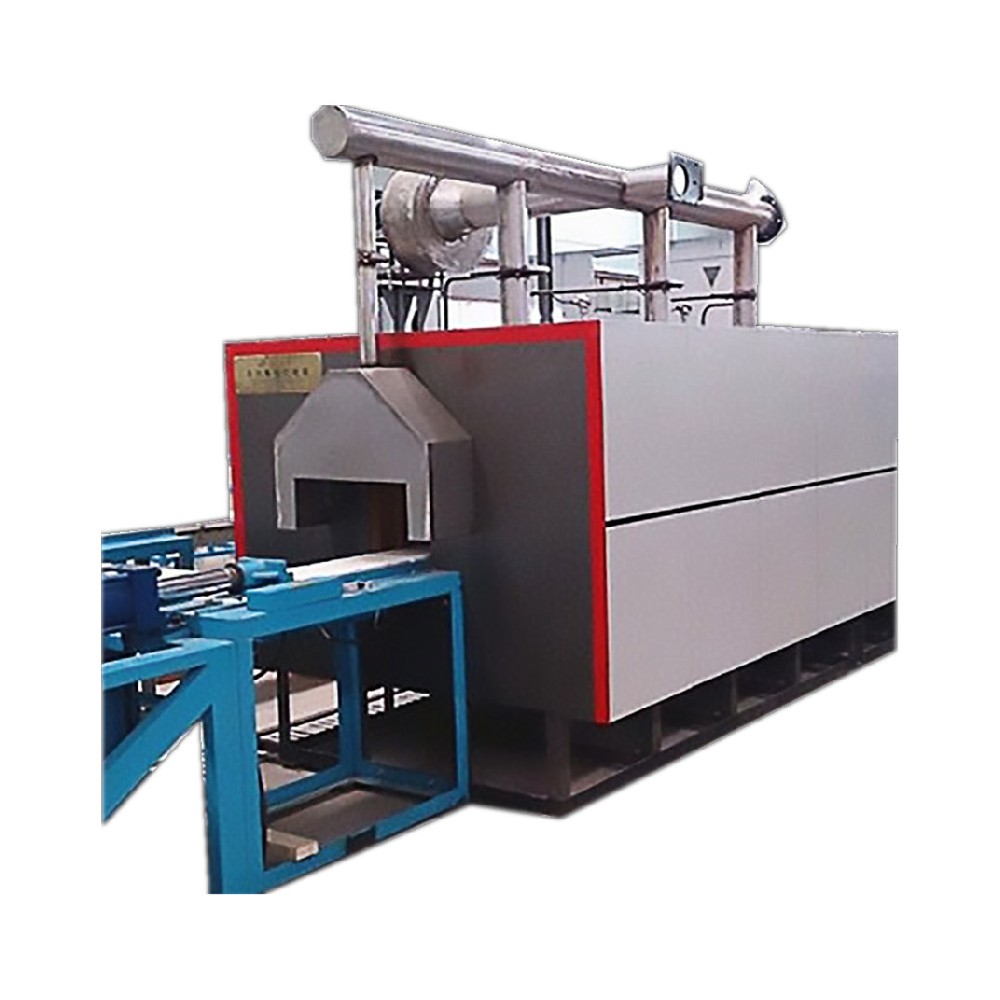
High-temperature microwave pusher kiln: An advanced thermal equipment with high efficiency and intelligence
-

Introduction to Tunnel-Type High-Temperature Sintering Furnace
-

Application of magnesium oxide push plate kiln