


PRODUCTS
NEWS
- Advantages of High-Temperature Microwave Heating
- Shijiazhuang Hongtao Technology Launches Advanced Wood Drying Room for Energy-Saving Production
- Title: Shijiazhuang Hongtao Technology Wood Dryer Finds Use Across Industries
- 专业的电池正负极材料高温碳化微波焙烧炉辊道窑哪家好
- 好用的电池正负极材料高温碳化微波焙烧炉辊道窑耐用的生产厂家
Contact us
Contacts:liu
Mobile:+86-15631158838
Tel:+86-15631158838
E-mail:zekun1985@126.com
Add:No. 3, Xu Road, Leping, Xiping, Zhengding, Shijiazhuang, Hebei Province

Electric roller kiln
Column:High-Temperature Roller Hearth Kiln
Date:2025-11-05
Visits:87
Desc:Electric roller kiln
An electric roller kiln is a lightweight continuous industrial furnace that uses electricity as its heat source. It is widely applied in industries such as ceramics, glass, and metallurgy.
Here is a detailed introduction about it: • Structural Composition: ◦ Main Body: It consists of a kiln body, feeding roller track, and discharging roller track. According to the thermal system, it can be divided into preheating zone, firing zone, and cooling zone. There is an exhaust pipe at the front end of the kiln body, which uses jet suction to exhaust waste gas. There is an air inlet pipe at the bottom for oxygen supplementation. ◦ Drive System: It includes roller bars, drive gears, drive shafts, reducers, and variable frequency speed-regulating motors. The speed-regulating motor controls the rotation of the reducer's output shaft, which drives the roller bars to rotate through the drive shaft and drive gears, thereby moving the workpieces inside the kiln. ◦ Heating System: It usually adopts resistance wire heating tubes, silicon carbide rods, silicon molybdenum rods, etc., as heating elements. According to the size of the kiln and process requirements, multiple temperature zones are set, with several groups of heating elements in each temperature zone. ◦ Control System: It is composed of temperature sensors, temperature control instruments, programmable controllers, etc., which can monitor and adjust parameters such as kiln temperature and atmosphere in real time. • Working Principle: The electric roller kiln uses electric heating elements such as silicon carbide rods and silicon molybdenum rods to convert electric energy into thermal energy, thereby increasing the temperature inside the kiln. The materials are placed on the roller bars and continuously move inside the kiln through the rotation of the roller track, passing through the preheating zone, firing zone, and cooling zone in sequence to complete the firing process. • Main Technical Parameters: The technical parameters of different models of electric roller kilns vary. Generally, the rated temperature can reach 1200℃-1400℃, the rated power ranges from tens of kilowatts to hundreds of kilowatts, the temperature control accuracy can reach ±1℃-±2℃, the cross-sectional temperature difference is ≤±5℃, and the conveying speed ranges from hundreds of millimeters per hour to thousands of millimeters per hour. • Advantages: ◦ Uniform Temperature: The kiln has a small cross-section and can heat simultaneously above and below the roller track, resulting in fast heating and uniform temperature distribution inside the kiln, with a temperature difference between upper and lower parts generally not exceeding 5℃, which is conducive to improving product quality. ◦ Energy-saving and Efficient: It does not require kiln cars or fireclay pots, has low heat consumption, and adopts a continuous production method, with production efficiency 20% higher than traditional kilns. ◦ High Degree of Automation: It is conducive to mechanization and automation of the firing process, facilitates connection between upper and lower processes to form a continuous production line, reduces labor intensity, and improves working conditions. ◦ Simple Structure: Compared with other types of kilns, the electric roller kiln has a relatively simple structure, lower cost, easy maintenance, and convenient operation.
- UP:没有了!
- NEXT:Roller hearth kiln
Recommend
-
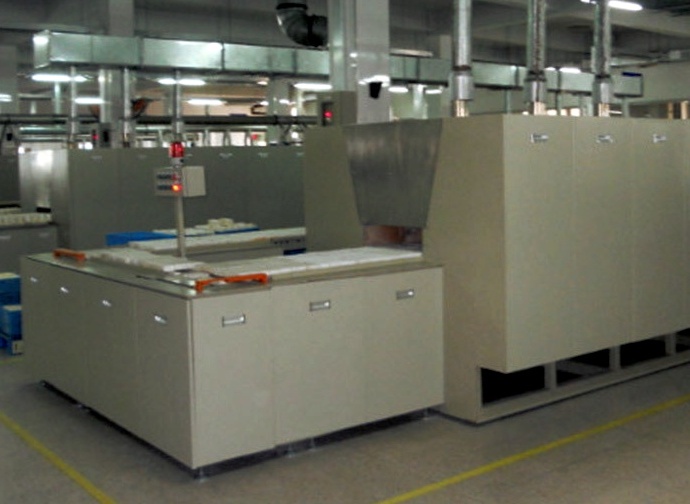
Quartz sand microwave high temperature rotary kiln equipment
-
उच्च तापमानाच्या क्षेत्रांत कार्यक्षम आद्यप्रवर्तक: रोलर अग्नीकुंड भट्ट्यांचें विश्लेशण
-

high temperature divisionofHigh efficiencypioneer: roller hearth kiln parse
-
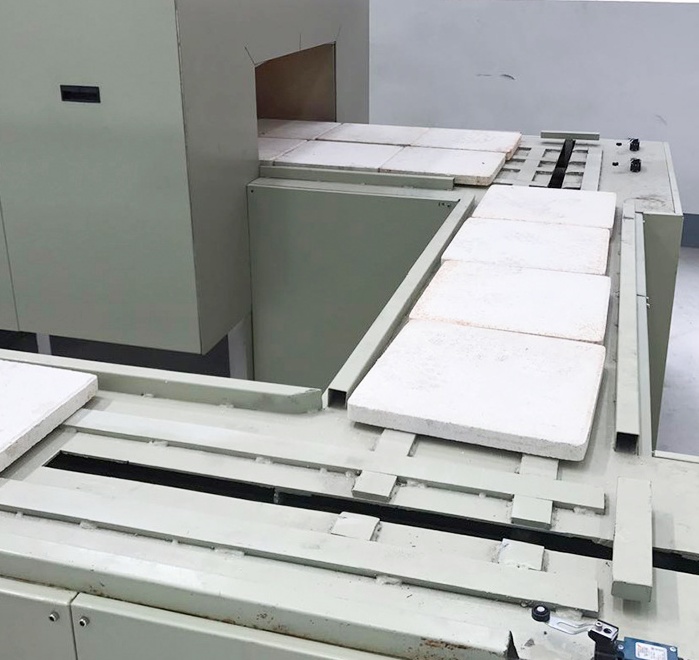
Efficient Pioneer in High-Temperature Fields: Analysis of Roller Hearth Kilns