


PRODUCTS
NEWS
- Advantages of High-Temperature Microwave Heating
- Shijiazhuang Hongtao Technology Launches Advanced Wood Drying Room for Energy-Saving Production
- Title: Shijiazhuang Hongtao Technology Wood Dryer Finds Use Across Industries
- 专业的电池正负极材料高温碳化微波焙烧炉辊道窑哪家好
- 好用的电池正负极材料高温碳化微波焙烧炉辊道窑耐用的生产厂家
Contact us
Contacts:liu
Mobile:+86-15631158838
Tel:+86-15631158838
E-mail:zekun1985@126.com
Add:No. 3, Xu Road, Leping, Xiping, Zhengding, Shijiazhuang, Hebei Province

Microwave Sintering Furnace Technology
Column:High temperature sintering furnace
Date:2026-01-19
Visits:18
Desc:Microwave Sintering Furnace Technology
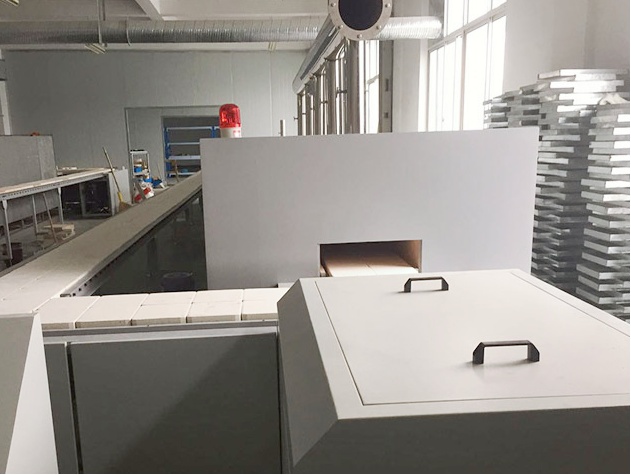
Microwave sintering furnace technology is a new material heat treatment technology that achieves densification sintering through the dielectric coupling effect between high-frequency electromagnetic fields and materials. Its core advantage lies in the 'from inside to outside' volumetric heating characteristic, which significantly improves efficiency and product performance compared to traditional sintering. It is widely used in high-end manufacturing fields such as ceramics, powder metallurgy, and magnetic materials, and is a direction for energy-saving innovation in material processing.
The core principle of the process is dielectric loss heating. Through 2.45GHz high-frequency electromagnetic waves acting on the material, internal polar molecules vibrate and polarize rapidly, directly converting electromagnetic energy into thermal energy without relying on external heat source conduction. This process has selective requirements for materials: only absorptive dielectric materials (such as silicon carbide, zirconia) can be heated directly. For materials with low dielectric loss, 5%-8% absorbers such as silicon carbide or silicon nitride need to be added to trigger uniform heating through power redistribution.
The complete process flow consists of three key stages: pretreatment, sintering parameter adjustment, and cooling. Pretreatment requires drying the degreased workpiece at 60-80°C for 2 hours, controlling the moisture content to be less than 1% and residual carbon content to be less than 0.5%, to avoid steam generation and blister defects during microwave heating. In the sintering stage, a gradient power heating strategy is adopted: initial low power of 500W for preheating, then increasing to rated power after heating to 1000°C, with real-time monitoring by infrared temperature measurement to control the furnace temperature difference within 10-20°C.
Parameter settings need to be adapted to material characteristics: for zirconia workpieces, set power to 800-1000W, heating rate to 10°C/min, hold at 1500°C for 1.5 hours, achieving a density of up to 99.2%; for alumina, due to low dielectric loss, set power to 1200-1500W, hold at 1600°C for 2 hours; for silicon carbide workpieces, argon gas protection (flow rate 5-10L/min) is required, hold at 1550°C for 1 hour, with oxidation rate reduced to 1%. In the cooling stage, controlled cooling at a rate of 5-8°C/min with furnace cooling reduces thermal stress cracking, with cracking rate reduced to below 2%.
This technology has significant technical advantages: heating rate reaches 10-20°C/min, sintering cycle is shortened by 50%-70%, energy consumption is reduced by 30%-80%; low-temperature sintering (50-100°C lower than traditional methods) can refine grains to 2-3μm, improving material bending strength by 20%-30%. It has already achieved industrial application, covering scenarios such as post-processing of ceramic 3D printing, hard alloy tool manufacturing, and sintering of soft ferrite. It can adapt to thin-walled, hollow complex structural parts and meet the batch production requirements of high-precision materials.
- UP:The process of sintering gemstones in high-temperature oxidation furnace and roller kiln
- NEXT:没有了!
Recommend
-
Microwave Sintering Furnace Technology
-
The process of sintering gemstones in high-temperature oxidation furnace and roller kiln
-
Mesh belt sintering furnace: Continuous and efficient industrial heat treatment core equipment
-
Silicon Carbide High-Temperature Sintering: Unlocking the High-Performance Code of Special Materials